How to do the Scissors Jump
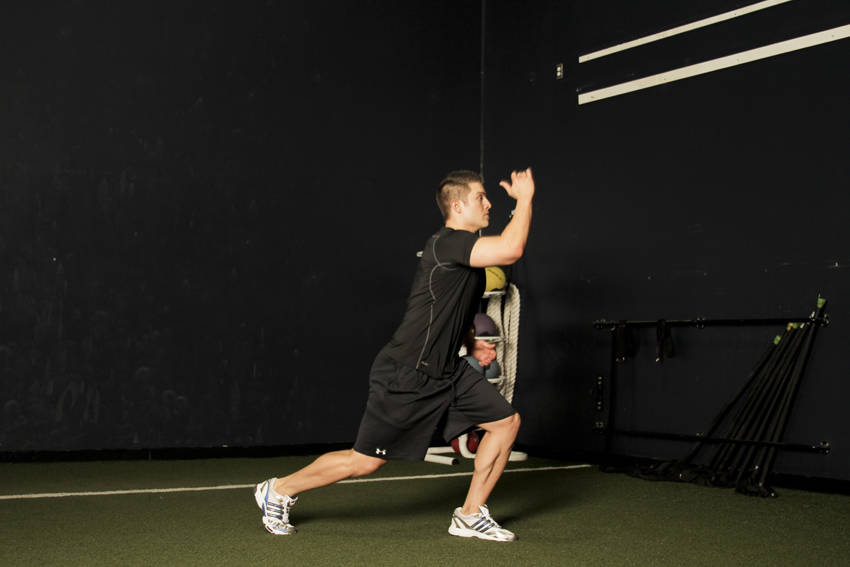
- Assume a lunge stance position with one foot forward with the knee bent, and the rear knee nearly touching the ground.
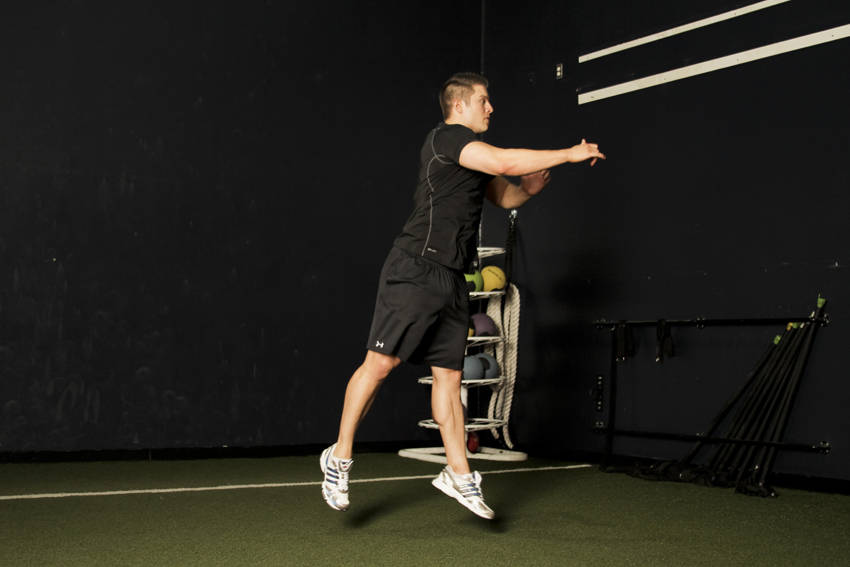
- Ensure that the front knee is over the midline of the foot. Extending through both legs, jump as high as possible, swinging your arms to gain lift.
- As you jump as high as you can, switch the position of your legs, moving your front leg to the back and the rear leg to the front.
- As you land, absorb the impact through the legs by adopting the lunge position, and repeat.
Muscles worked
| Role | Muscles |
|---|---|
| Primary | quads |
| Secondary | glutes, hamstrings |
| Equipment | no equipment |
| Difficulty | beginner |
| Type | compound |
Train the same muscles a different way
6 alternatives for the same quads, with and without kit.
Harder than the Scissors Jump
Common questions
What muscles does the Scissors Jump work?
The Scissors Jump primarily works the quads, with the glutes and hamstrings as secondary movers. Alternate Leg Diagonal Bound, Bench Jump, and Bench Sprint train the same muscle, across 9 equipment types.
What equipment do you need for the Scissors Jump?
None — the Scissors Jump is bodyweight, so it works at home, in a hotel room or outdoors. Alternate Leg Diagonal Bound and Bench Jump also need nothing.
Is the Scissors Jump suitable for beginners?
Yes, the Scissors Jump is rated beginner. Zercher Squats, Weighted Sissy Squat, and Squat Jerk are the progressions from here.
Where should the Scissors Jump go in a workout?
Early — the Scissors Jump is compound, working 3 muscle groups, so run it first or second while you are fresh.
Similar exercises
Build a full legs session around this
The free generator picks the sets, reps and supporting exercises for you — using only the equipment you actually have.
Build a free workout