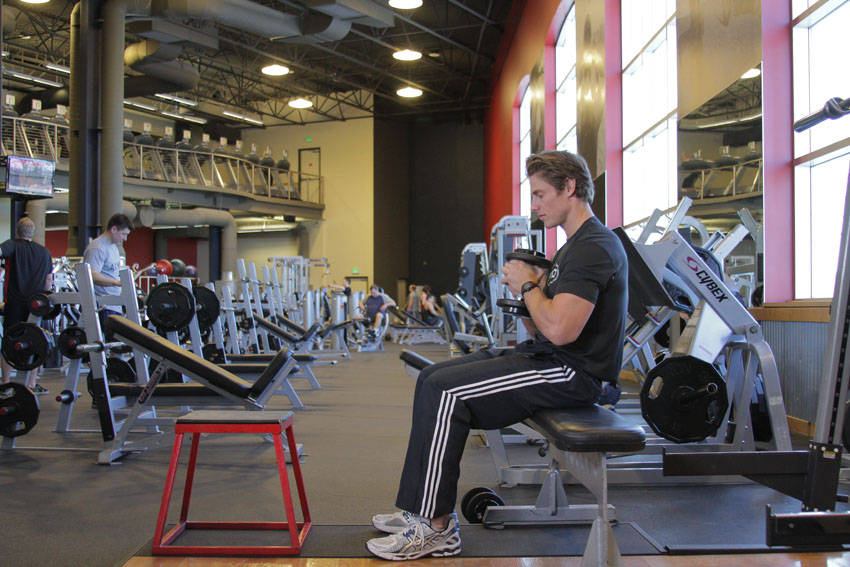
How to do the Dumbbell Seated Box Jump
- Position a box a couple feet to the side of a bench. Hold a dumbbell to your chest with both hands and seat yourself on the bench facing the box. This will be your starting position.
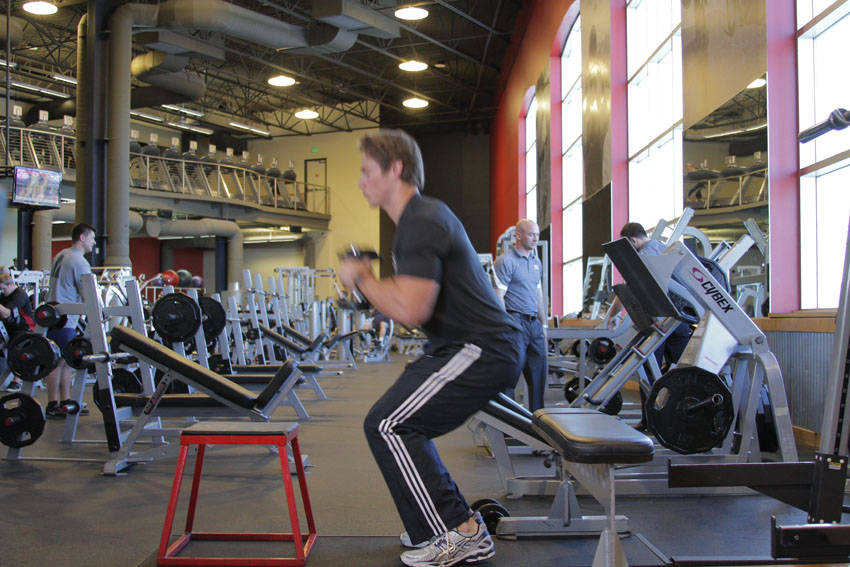
- Plant your feet firmly on the ground as you lean forward, extending through the hips and knees to jump up and forward.
- Land on the box with both feet, absorbing the impact by allowing the hips and knees to bend.
- Step down and return to the starting position.
Muscles worked
| Role | Muscles |
|---|---|
| Primary | quads |
| Secondary | calves, glutes, hamstrings |
| Equipment | dumbbell |
| Difficulty | intermediate |
| Type | compound |
No dumbbell? Train the same muscles with these
Ordered by how likely you are to own the 6 options.
Easier than the Dumbbell Seated Box Jump
Same movement pattern, lower entry difficulty — work up from here.
Harder than the Dumbbell Seated Box Jump
Common questions
What muscles does the Dumbbell Seated Box Jump work?
The Dumbbell Seated Box Jump primarily works the quads, with the calves, glutes, and hamstrings as secondary movers. Alternate Leg Diagonal Bound, Bench Jump, and Bench Sprint train the same muscle, across 9 equipment types.
What equipment do you need for the Dumbbell Seated Box Jump?
Dumbbells. Without dumbbells, Alternate Leg Diagonal Bound, Bench Jump, and Double Leg Butt Kick train the same muscle, and 27 of the catalogue's options for this muscle need no equipment.
Is the Dumbbell Seated Box Jump suitable for beginners?
It is rated intermediate. Start with Alternate Leg Diagonal Bound, Bench Sprint, and Depth Jump Leap and work up.
Where should the Dumbbell Seated Box Jump go in a workout?
Early — the Dumbbell Seated Box Jump is compound, working 4 muscle groups, so run it first or second while you are fresh.
Similar exercises
Build a full legs session around this
The free generator picks the sets, reps and supporting exercises for you — using only the equipment you actually have.
Build a free workout