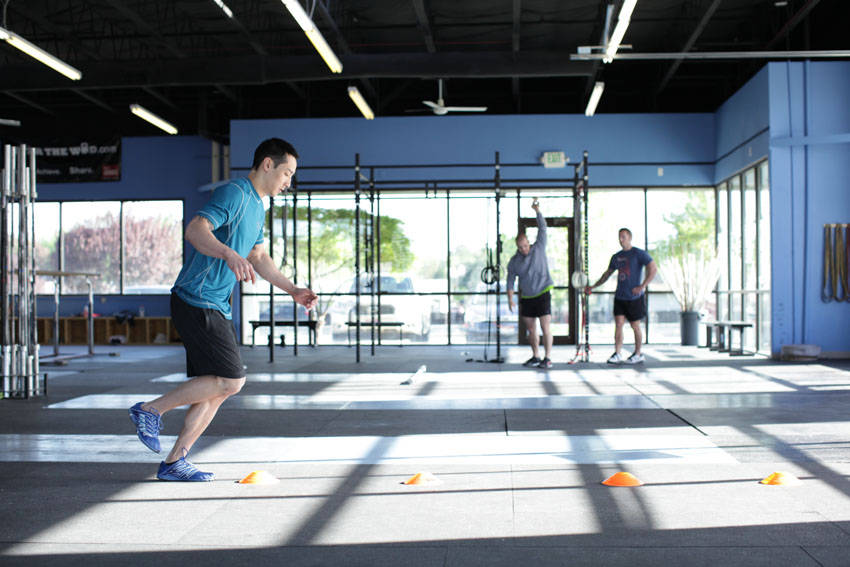
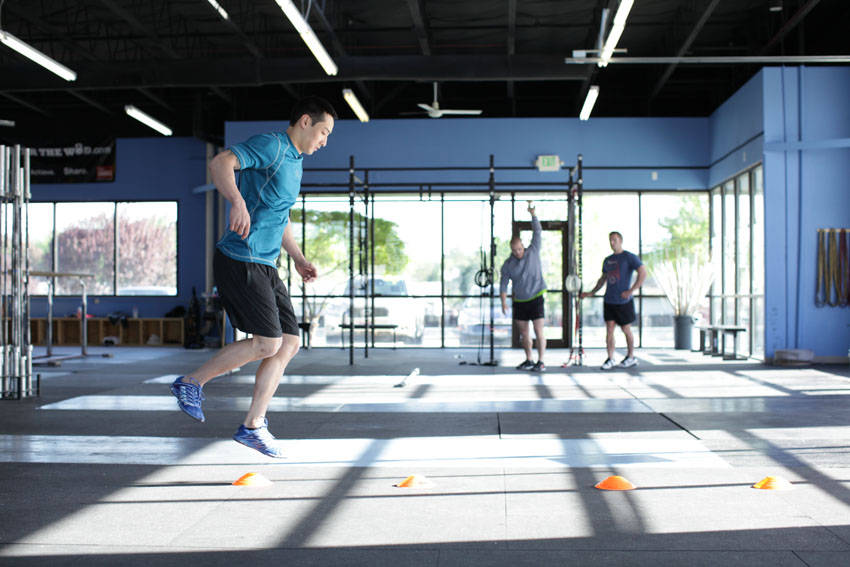
How to do the Single-Leg Hop Progression
- Arrange a line of cones in front of you. Assume a relaxed standing position, balanced on one leg. Raise the knee of your opposite leg. This will be your starting position.
- Hop forward, jumping and landing with the same leg over the cone.
- Use a countermovement jump to hop from cone to cone.
- At the end, turn around and go back on the other leg.
Muscles worked
| Role | Muscles |
|---|---|
| Primary | quads |
| Secondary | abductors, adductors, calves, hamstrings |
| Equipment | other equipment |
| Difficulty | beginner |
| Type | compound |
No other equipment? Train the same muscles with these
Ordered by how likely you are to own the 6 options.
Harder than the Single-Leg Hop Progression
Common questions
What muscles does the Single-Leg Hop Progression work?
The Single-Leg Hop Progression primarily works the quads, with the abductors, adductors, calves, and hamstrings as secondary movers. Alternate Leg Diagonal Bound, Depth Jump Leap, and Double Leg Butt Kick train the same muscle, across 9 equipment types.
What equipment do you need for the Single-Leg Hop Progression?
The Right Equipment. Without the right equipment, Alternate Leg Diagonal Bound, Double Leg Butt Kick, and Fast Skipping train the same muscle, and 27 of the catalogue's options for this muscle need no equipment.
Is the Single-Leg Hop Progression suitable for beginners?
Yes, the Single-Leg Hop Progression is rated beginner. Zercher Squats, Weighted Sissy Squat, and Squat Jerk are the progressions from here.
Where should the Single-Leg Hop Progression go in a workout?
Early — the Single-Leg Hop Progression is compound, working 5 muscle groups, so run it first or second while you are fresh.
Similar exercises
Build a full legs session around this
The free generator picks the sets, reps and supporting exercises for you — using only the equipment you actually have.
Build a free workout