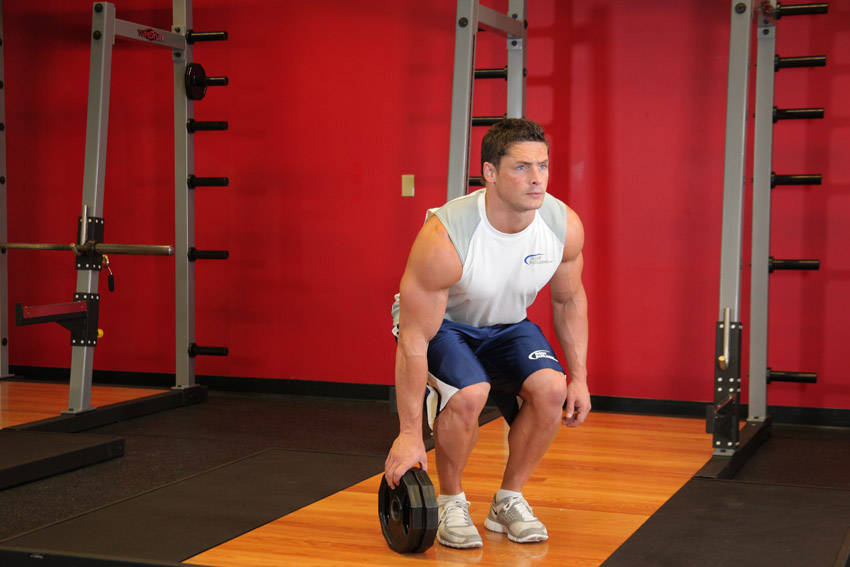
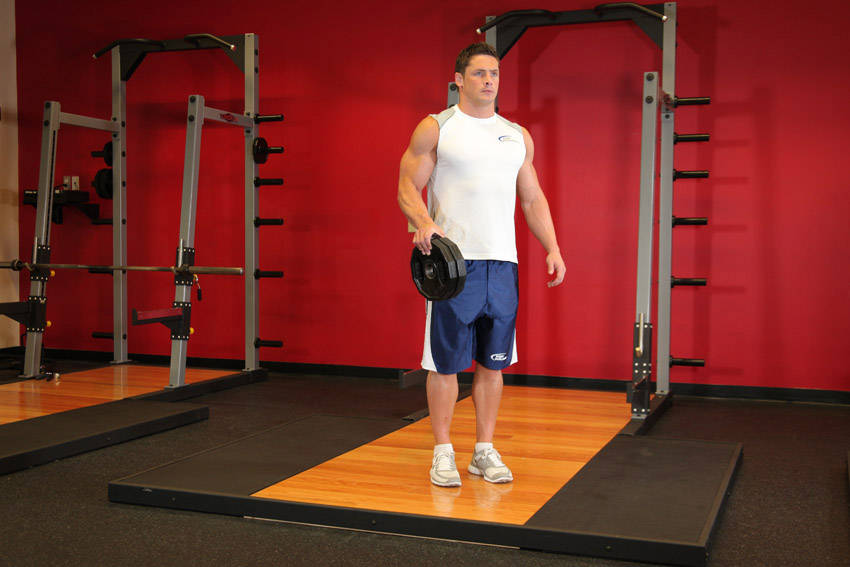
How to do the Plate Pinch
- Grab two wide-rimmed plates and put them together with the smooth sides facing outward
- Use your fingers to grip the outside part of the plate and your thumb for the other side thus holding both plates together. This is the starting position.
- Squeeze the plate with your fingers and thumb. Hold this position for as long as you can.
- Repeat for the recommended amount of sets prescribed in your program.
- Switch arms and repeat the movements.
Muscles worked
| Role | Muscles |
|---|---|
| Primary | forearms |
| Equipment | other equipment |
| Difficulty | intermediate |
| Type | isolation |
No other equipment? Train the same muscles with these
Ordered by how likely you are to own the 6 options.
Easier than the Plate Pinch
Same movement pattern, lower entry difficulty — work up from here.
Superset the Plate Pinch with
Opposing biceps work — alternate sets without extra rest.
Common questions
What muscles does the Plate Pinch work?
The Plate Pinch primarily works the forearms. Standing Olympic Plate Hand Squeeze, Kneeling Forearm Stretch, and Cable Wrist Curl train the same muscle, across 6 equipment types.
What equipment do you need for the Plate Pinch?
The Right Equipment. Without the right equipment, Dumbbell Lying Pronation, Dumbbell Lying Supination, and Palms-Down Dumbbell Wrist Curl Over A Bench train the same muscle, and 2 of the catalogue's options for this muscle need no equipment.
Is the Plate Pinch suitable for beginners?
It is rated intermediate. Start with Standing Olympic Plate Hand Squeeze and Kneeling Forearm Stretch and work up.
Where should the Plate Pinch go in a workout?
Late — the Plate Pinch is isolation work, so it follows your compounds. Supersetting it with Reverse Plate Curls and Dumbbell Prone Incline Curl cuts session time without extra rest.
Similar exercises
Build a full arms session around this
The free generator picks the sets, reps and supporting exercises for you — using only the equipment you actually have.
Build a free workout