How to do the Downward Facing Balance
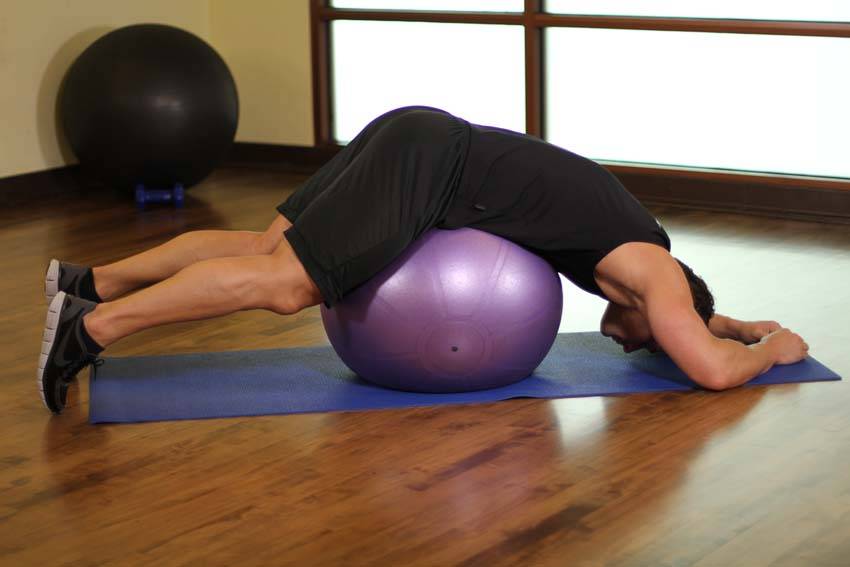
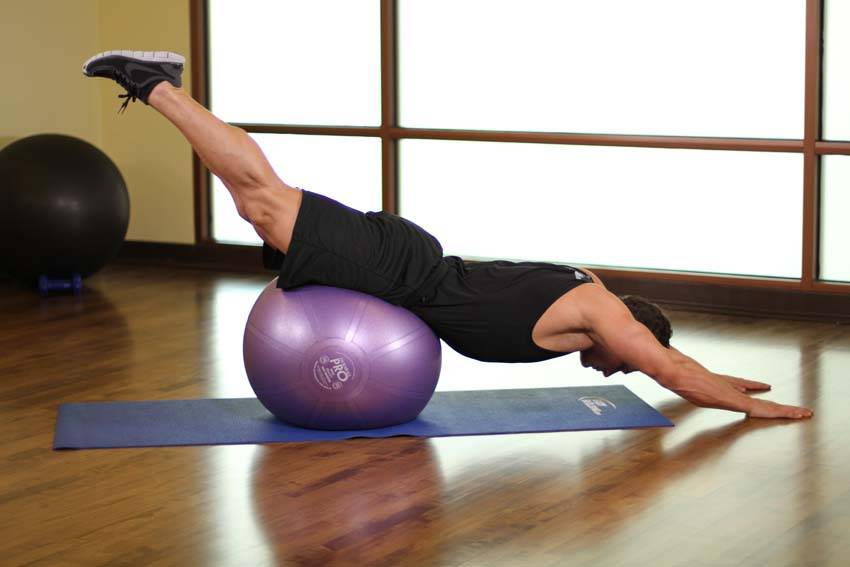
- Lie facedown on top of an exercise ball.
- While resting on your stomach on the ball, walk your hands forward along the floor and lift your legs, extending your elbows and knees.
Muscles worked
| Role | Muscles |
|---|---|
| Primary | glutes |
| Secondary | abs, hamstrings |
| Equipment | exercise ball |
| Difficulty | intermediate |
| Type | isolation |
No exercise ball? Train the same muscles with these
Ordered by how likely you are to own the 6 options.
Easier than the Downward Facing Balance
Same movement pattern, lower entry difficulty — work up from here.
Harder than the Downward Facing Balance
Superset the Downward Facing Balance with
Opposing quads work — alternate sets without extra rest.
Common questions
What muscles does the Downward Facing Balance work?
The Downward Facing Balance primarily works the glutes, with the abs and hamstrings as secondary movers. Butt Lift (Bridge), Leg Lift, and One-Legged Cable Kickback train the same muscle, across 6 equipment types.
What equipment do you need for the Downward Facing Balance?
An Exercise Ball. Without an exercise ball, Butt Lift (Bridge), Leg Lift, and Single Leg Glute Bridge train the same muscle, and 11 of the catalogue's options for this muscle need no equipment.
Is the Downward Facing Balance suitable for beginners?
It is rated intermediate. Start with One Knee To Chest, Ankle On The Knee, and Knee Across The Body and work up.
Where should the Downward Facing Balance go in a workout?
Late — the Downward Facing Balance is isolation work, so it follows your compounds. Supersetting it with Barbell Full Squat and Barbell Hack Squat cuts session time without extra rest.
Similar exercises
Build a full legs session around this
The free generator picks the sets, reps and supporting exercises for you — using only the equipment you actually have.
Build a free workout